
The annual March Against Drugs and Violence was held in Billings, Montana on the Yellowstone County Courthouse Lawn on July 11, 2026, during a record-breaking heatwave over the weekend. Temperatures soared to 105°F and climbed to an unprecedented 112°F by Sunday. The community was not deterred.
The March Against Drugs and Violence (MADV) began nearly thirty years ago when founder Michael Yakawich decided to take a stand after dodging a bullet from a drive-by shooting and growing tired of picking up drug needles on his neighborhood streets. Decades later, dozens of local organizations work together each year to draw hundreds of people to spread awareness about preventing drugs from getting into the wrong hands, connecting people facing addiction with support services, and educating the community about warning signs that loved ones may be at risk.
What began as one man’s determination to make Billings safer has grown into one of Montana’s longest-running grassroots efforts promoting recovery, prevention, and hope.
The event was emceed by Nick Enslow, who represented the Boys and Girls Club of Yellowstone County. He welcomed attendees and recognized the many community organizations, volunteers, law enforcement officers, and recovery partners who continue to support the march’s mission. Billings Mayor Nike Nelson also addressed the crowd, thanking those who dedicate their time and resources to building a safer and healthier community.
Deputy Mayor Mike Boyett read the official City of Billings proclamation declaring the week of July 6–11 as Drug Abuse and Violence Prevention Week. The proclamation recognized the importance of community partnerships, education, prevention efforts, and recovery resources in addressing the ongoing challenges of substance abuse and violence throughout Yellowstone County. Words of support were also given by Yellowstone County Commissioner Chris White and Montana Senator Steve Daines.
Among those recognized was Billings Police Chief Rich St. John, who will retire later this year after a distinguished career in law enforcement. St. John has supported the March Against Drugs and Violence since its earliest years. As a young police officer, he helped protect march participants when the event was still in its infancy, walking alongside community members committed to making Billings a safer place. Nearly three decades later, he continues to show up every year, a reminder of the enduring partnerships between law enforcement and the community in confronting addiction and violence.
The most powerful moment of the event came from keynote speaker Michelle Laviolette, whose deeply personal story of addiction and recovery left many in attendance visibly moved.
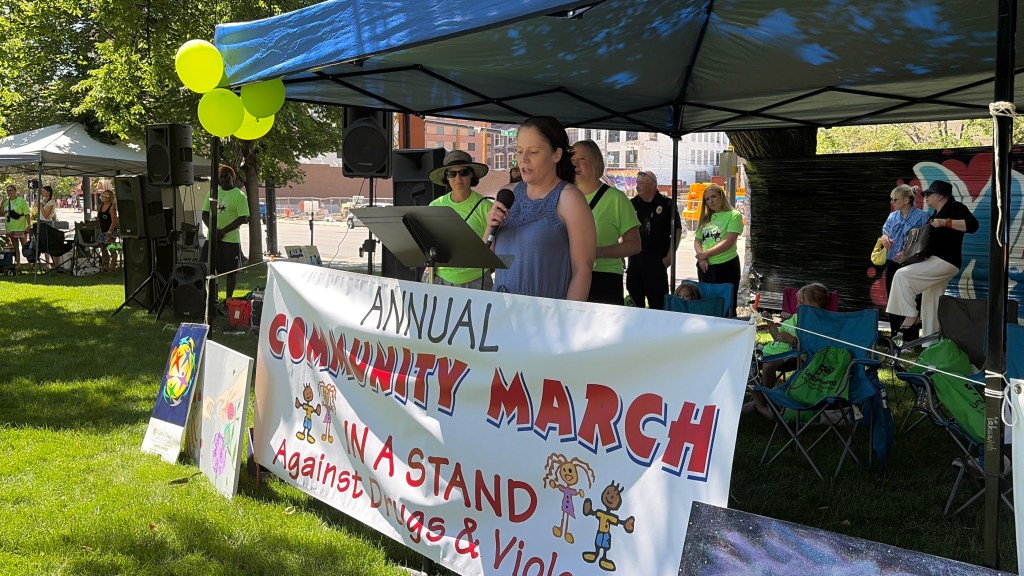
Growing up in Wibaux, Montana, Laviolette described a childhood that eventually gave way to experimenting with methamphetamine as a teenager.
“From the very moment I tried it, my life changed,” she said.
Like many struggling with addiction, she believed she would be different—that she could use meth while remaining in control of her life. Instead, the drug became an escape from difficult emotions and life’s hardships.
“I would lie, cheat and steal and manipulate people close to me to feed my addiction,” she shared honestly.
As her addiction deepened, she found herself in and out of jail, repeatedly promising her parents she would change while continuing to manipulate those who loved her most. She spoke candidly about the shame she carried and the feeling of being trapped in a cycle she could not break.
“My addiction stole things in my life that were irreplaceable—time I can never get back.”
Fighting back tears, Laviolette reflected on the milestones she missed with her children during the years addiction controlled her life. She described lying awake at night replaying the decisions she wished she could undo.
“Some nights I relived every bad choice,” she said.
Her voice broke again as she urged others not to wait until they had experienced the same pain.
“Trust me when I say I learned the hard way.”
Recovery, she explained, did not happen overnight. It required accountability, support, and people willing to walk beside her through every step. She credited Passages with helping guide her through recovery, offering both structure and compassion as she rebuilt her life.
In one of the most inspiring moments of the day, attendees learned that Laviolette had lost her mother only three weeks earlier. Despite her grief, she honored her commitment to speak at MADV and continues faithfully attending every recovery meeting, demonstrating the resilience and perseverance that have become hallmarks of her journey.
Her testimony embodied the very purpose of the March Against Drugs and Violence: reminding those who are struggling that recovery is possible, that no one has to face addiction alone, and that healing begins when a community chooses compassion over judgment.
As another March Against Drugs and Violence came to a close, participants left with more than information and resources. They left with renewed hope. While the historic heat made headlines, the lasting memory of the day was the courage of people willing to share their stories, the dedication of organizations committed to prevention and recovery, and a community that continues to stand together in the belief that lives can be changed.
MADV is sponsored by the Global Peace Foundation, Boys and Girls Club of Yellowstone County, Yellowstone Boys and Girls Ranch, Rimrock Foundation, Rotary Club of Laurel, Black Heritage Foundation, Elks, Family Tree Nurturing Center, Alternatives, Bridgemont, the HOPE coalition, Phillips 66, Tumbleweed, Republic Services, and the Yellowstone County DUI Task Force. It is made possible by generous donations from individuals in the community. Special thanks to Jim Ronquillo and Bill Kennedy who were the chefs at the event, providing free food to all participants.


Leave a Reply